

Introduction
Walk into any bookstore and you’ll see it: an entire section devoted to self-improvement, packed with hundreds of titles promising to fix your habits, heal your mindset, or transform your life in 30 days. It’s overwhelming. And if you’ve ever bought a self-help book that ended up collecting dust on your shelf, you already know that not every book delivers on its promise.
Learning how to choose a self-help book that actually works for you isn’t about luck it’s about knowing what to look for before you buy. In this guide, we’ll break down exactly how to pick the right self-help book based on your goals, your learning style, and the credibility of the author, so you stop wasting money on books you never finish.
Quick Reference: How to Choose a Self-Help Book by Type
| Factor | Beginner Stage | Intermediate Stage | Advanced Stage |
|---|---|---|---|
| Best Book Style | Simple, step-by-step frameworks | Deeper psychology-based strategies | Research-heavy or philosophical |
| Author Type | Motivational speaker or coach | Coach or practitioner with case studies | Psychologist, therapist, or researcher |
| Focus | Foundational concepts | Applying and refining habits | Nuanced, long-term behavior change |
| Best For | First-time self-help readers | Readers who know the basics | Readers wanting evidence-based depth |
| Book Type | What It Offers | Best If You… |
|---|---|---|
| Action-Based | Exercises, worksheets, step-by-step systems | Need structure and concrete tasks |
| Insight-Based | Mindset shifts, emotional understanding | Know what to do but not why you don’t |
Why Choosing the Right Self-Help Book Matters
Not all self-help books are created equal. Some are backed by decades of research and real-world case studies. Others are built entirely on personal anecdotes with little evidence behind them. Some are written for beginners just starting their self-improvement journey, while others assume you already have a foundation of habits and mindset work in place.
If you choose a self-help book that doesn’t match where you currently are, you’ll likely feel confused, unmotivated, or like the advice simply doesn’t apply to your life. That’s not because self-help doesn’t work it’s because the wrong book was chosen for the wrong stage of your journey.Why Choosing the Right Book Matters
The good news? Once you know how to choose a self-help book strategically, you’ll save time, money, and mental energy, and you’ll actually start seeing results from what you read.
Step 1: Get Clear on What You Actually Need Help With
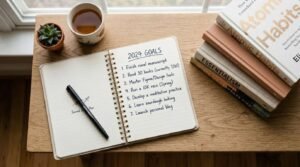
Before you even open Amazon or walk into a bookstore, ask yourself one simple question: What specific area of my life am I trying to improve?
Self-help is a broad category. It includes books on:
- Productivity and time management
- Confidence and self-esteem
- Anxiety and stress management
- Relationships and communication
- Career growth and mindset
- Habit building and discipline
- Emotional healing and trauma recovery
- Financial mindset and money habits
Trying to pick a self-help book without narrowing down your focus is like walking into a gym without knowing what you’re training for. You’ll end up grabbing something popular instead of something useful.
Tip: Write down the one or two problems you’re actually trying to solve right now. This single step eliminates 80% of books that aren’t relevant to you.
Step 2: Understand Your Current Stage of Growth
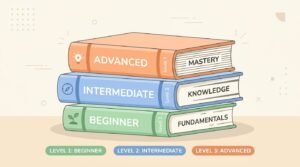
Self-help books are generally written for different stages of a reader’s journey. Choosing a book meant for someone further along than you (or someone earlier than you) is one of the most common mistakes people make.
Ask yourself which category you fall into:
Beginner stage – You’re new to self-improvement and want foundational concepts explained simply. Look for books with clear structure, simple language, and step-by-step frameworks.
Intermediate stage – You already understand the basics (mindset, habits, goal-setting) and want deeper strategies or psychology-based insights.
Advanced stage – You’re looking for nuanced, research-heavy, or philosophical approaches to personal growth, often written by psychologists, therapists, or researchers.
Matching the book’s complexity to your stage prevents the two most common outcomes: feeling like the book is “too basic” or feeling completely lost and giving up halfway through.
Step 3: Check the Author’s Credibility and Background

This is one of the most overlooked steps when choosing a self-help book — and one of the most important.
Ask:
- Is the author a psychologist, therapist, researcher, or someone with relevant professional experience?
- Or are they primarily a motivational speaker or influencer without clinical or research backing?
Both types of authors can offer value, but they serve different purposes. A licensed therapist writing about anxiety will likely offer more clinically accurate strategies than an influencer sharing personal opinions. On the other hand, someone who has lived through a specific struggle (addiction recovery, career reinvention, grief) may offer real, relatable insight that a strictly clinical book won’t.
Quick credibility check:
- Read the author’s bio
- Look up their professional background
- Check if the book references studies, data, or clinical experience — or if it’s purely personal opinion
Neither approach is automatically better, but knowing which one you’re getting helps you set the right expectations.
Step 4: Read Reviews (But Read Them the Right Way)

Star ratings alone don’t tell you enough. A book can have thousands of five-star reviews and still not be the right fit for you. Instead of just checking the rating, read a handful of 3-star reviews specifically.
Why? Five-star reviews are often emotional and vague (“This book changed my life!”), while one-star reviews are sometimes reactionary. Three-star reviews tend to be the most balanced — they usually explain specifically what worked, what didn’t, and who the book is best suited for.
Look for patterns like:
- “This is great for beginners, but not deep enough for someone who already knows the basics.”
- “Very research-heavy, not much practical action.”
- “Repetitive, but the core message is powerful.”
These details help you predict whether the book matches your expectations before you buy it.
Step 5: Preview the Table of Contents and Sample Chapter
Before buying, always check the table of contents. This alone can tell you a lot:
- Is the book structured with clear, actionable chapters?
- Does it focus more on theory or practical exercises?
- Does the flow match the way you like to learn — step-by-step, story-based, or research-based?
Most platforms (Amazon, Google Books, Apple Books) let you preview the first chapter for free. Use this preview to check the writing style. Ask yourself:
- Does this feel engaging or does it feel like a lecture?
- Do I understand the core message from the first few pages?
- Does the tone match my personality — motivational, calm, direct, spiritual, scientific?
A self-help book you enjoy reading is far more likely to actually get finished — and applied — than one that feels like a chore.
Step 6: Decide Between Action-Based vs. Insight-Based Books

Self-help books generally fall into two broad categories:
Action-based books give you specific exercises, frameworks, and step-by-step systems to follow. These are great if you want structure and concrete tasks (think workbooks, 30-day challenges, habit trackers).
Insight-based books focus more on shifting your mindset, understanding your emotions, or reframing how you see a situation. These are great if you already know what to do but struggle with why you keep sabotaging yourself.
Some people need action steps. Others need to understand the psychology behind their behavior first. Choosing a self-help book that matches which type you need will make a huge difference in how useful it feels.
Step 7: Avoid the “One Book Fixes Everything” Trap
A common mistake is expecting a single self-help book to solve every problem in your life. In reality, most books are designed to go deep on one specific topic — confidence, discipline, communication, healing — not all of them at once.
Instead of searching for the “perfect” all-in-one book, it’s more effective to:
- Choose one book focused on your current top priority
- Fully apply what you learn before moving to the next book
- Build a small personal library over time, each book targeting a different area of growth
This approach leads to real, sustainable change instead of surface-level motivation that fades within a week.
Step 8: Watch Out for Red Flags
When learning how to choose a self-help book, it’s just as important to know what to avoid. Be cautious of books that:
- Promise unrealistic results (“Change your life in 3 days”)
- Rely heavily on absolute claims without evidence
- Push expensive upsells (courses, coaching, “next-level” programs) throughout the book
- Use fear-based language to keep you anxious and dependent on the author’s advice
A well-written self-help book should empower you to think for yourself — not make you feel like you constantly need more products to succeed.
Bonus Tip: Match the Book to Your Learning Style
Everyone absorbs information differently. When choosing a self-help book, consider:
-
- Story-driven learners – Look for books built around case studies, personal stories, or client examples.
- Story-driven learners – Look for books built around case studies, personal stories, or client examples.
- Data-driven learners – Look for books citing psychological research, statistics, and studies.
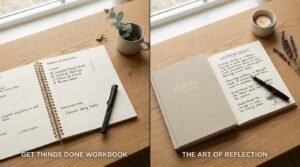
- Practical learners – Look for books with worksheets, exercises, and structured action plans.
- Big-picture learners – Look for books focused on mindset shifts and philosophy rather than step-by-step systems.
Choosing a format that matches how you naturally learn increases the chances you’ll actually finish the book — and use what you learn.
Final Thoughts: Choose With Intention, Not Impulse
Choosing a self-help book doesn’t have to feel overwhelming once you understand what to look for. Instead of grabbing the most popular title on a bestseller list, take a few extra minutes to:
- Identify your specific goal
- Match the book to your current growth stage
- Check the author’s credibility
- Read balanced reviews
- Preview the writing style
- Decide between action-based or insight-based content
When you approach self-help book shopping with intention rather than impulse, you set yourself up to actually apply what you read — and that’s where real transformation happens.
Looking for book recommendations based on your specific goals? Save this guide and use it as a checklist next time you’re ready to pick your next self-help read.
1. How do I know which self-help book is right for me?
Start by identifying the specific area you want to improve, then match the book to your current growth stage — beginner, intermediate, or advanced.
2. Should I trust bestseller lists when choosing a self-help book?
Not always. Bestsellers are popular, but popularity doesn’t guarantee the book fits your specific needs or goals.
3. What’s the difference between action-based and insight-based self-help books?
Action-based books give step-by-step exercises, while insight-based books focus on mindset and emotional understanding.
4. Does the author’s background matter when choosing a self-help book?
Yes. Authors with clinical or research backgrounds often offer more evidence-based advice than motivational speakers alone.
5. How can I tell if a self-help book is too basic or too advanced for me?
Preview the table of contents and a sample chapter — if it feels too simple or too complex, it’s likely not the right stage for you.
6. Are self-help books based on personal stories reliable?
They can be helpful and relatable, but they’re often less research-backed than books written by licensed professionals.
7. Should I read multiple self-help books at once?
It’s better to focus on one book and topic at a time, fully apply the lessons, then move to the next.
8. What are red flags to avoid when picking a self-help book?
Watch for unrealistic promises, fear-based language, and heavy upselling of extra courses or coaching.
9. Do reviews help when choosing a self-help book?
Yes especially 3-star reviews, which usually give balanced, specific feedback instead of extreme praise or criticism.
10. How many self-help books should I read in a year?
There’s no fixed number — focus on quality and application over quantity for real, lasting change.